Contributor Lifecycle Analysis
- Overview
- The Five Lifecycle Stages
- How Classification Works
- Lifecycle Stages in ContributorIQ
- Using Lifecycle Data
Overview
Contributor lifecycle analysis classifies each contributor's current engagement level with a repository. This helps identify retention risks, succession planning needs, and onboarding progress.
The Five Lifecycle Stages
Peak
The contributor is actively and consistently working on the repository. They have established tenure (90+ days) and their recent commit frequency is stable or growing compared to prior periods.
Peak contributors are your core team. They represent the knowledge backbone of the project.
Ramping Up
The contributor started contributing fewer than 90 days ago. They are still building context and may not yet have deep knowledge of the codebase.
Ramping-up contributors need mentorship and clear onboarding paths. Their bus factor contribution is typically low until they reach peak stage.
Winding Down
The contributor's recent activity (last 90 days) has dropped below 50% of their activity in the prior 90-day period, and they had meaningful prior activity (more than 5 commits). This pattern often precedes departure.
Winding-down contributors warrant attention. They may be transitioning to other projects, losing engagement, or preparing to leave. If they are a key knowledge holder, begin knowledge transfer immediately.
Dormant
No commits in the last 90-365 days. The contributor hasn't departed but is no longer actively contributing. They may still be reachable for knowledge transfer.
Departed
No commits in over 365 days. For practical purposes, this contributor's knowledge is no longer accessible through normal channels. Any files where they are the primary author should be considered at risk.
How Classification Works
Classification uses commit timestamps from the repository pivot data:
- Last commit date determines if the contributor is departed (365+ days) or dormant (90-365 days)
- First commit date determines if they are ramping up (tenure < 90 days)
- Commit frequency comparison between the most recent 90-day window and the prior 90-day window detects winding-down patterns
- All other active contributors are classified as peak
Each contributor is classified independently per repository. A contributor may be "peak" in one repository and "winding down" in another. The profile page shows the most common stage across all their repositories.
Lifecycle Stages in ContributorIQ
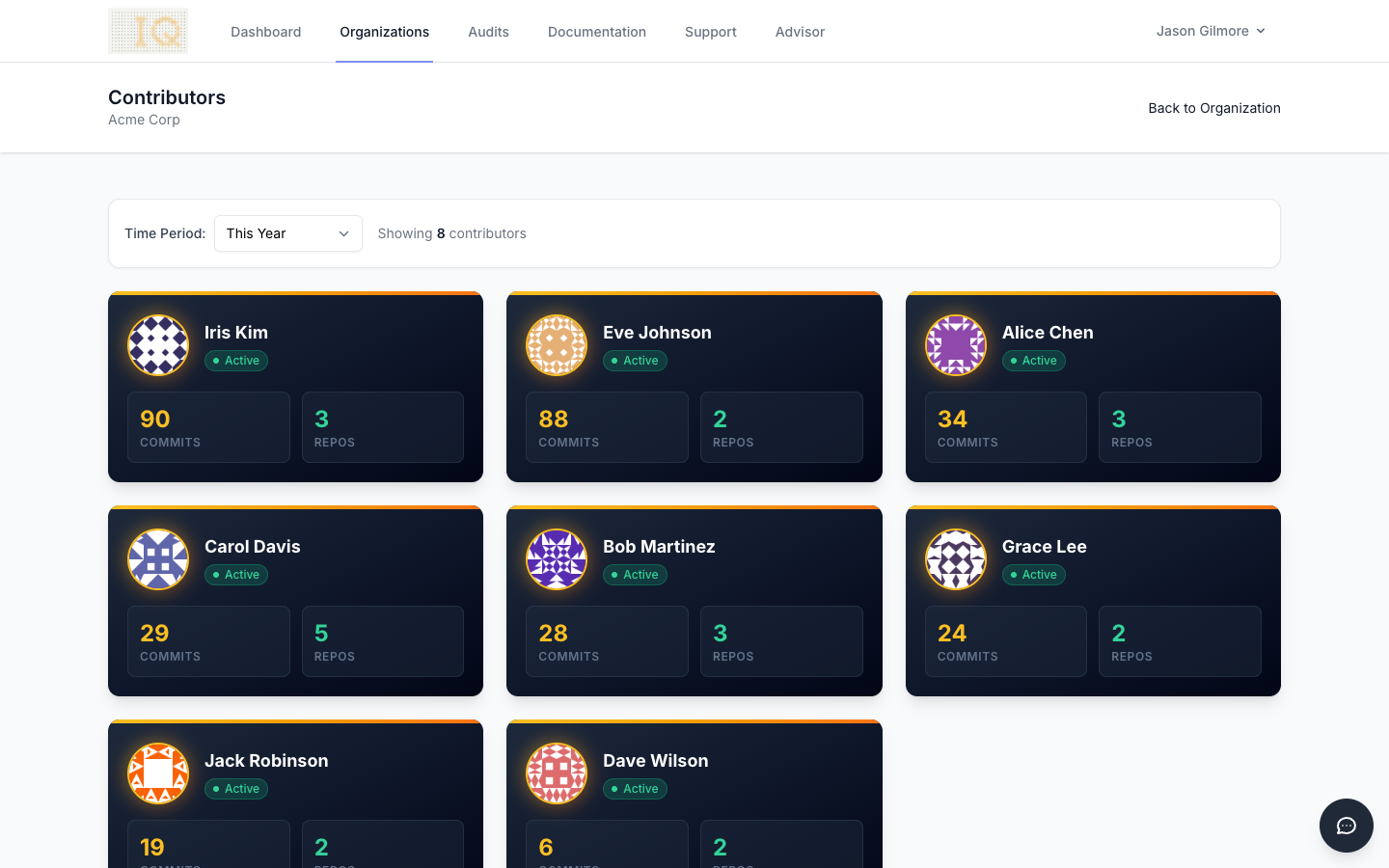
The Contributors overview page displays the lifecycle distribution for your entire organization, showing how many contributors are in each stage. This visualization makes it easy to spot trends like a growing number of winding-down contributors or an influx of new team members still ramping up.
Using Lifecycle Data
For Retention Planning
- Watch for peak-to-winding-down transitions in key contributors
- High concentrations of winding down or dormant contributors signal team health issues
- Compare lifecycle distributions across repositories to identify uneven engagement
For Succession Planning
- Pair ramping up contributors with peak contributors on critical repositories
- When a winding down contributor is the primary author on orphaned files, prioritize knowledge transfer
- Track how long contributors stay in ramping up, since extended ramp times may indicate onboarding friction
For Due Diligence
- A healthy organization has most contributors in peak stage
- High departed counts relative to total contributors suggest turnover problems
- Repositories where all peak contributors are winding down are immediate risks